She remembered Jenkinson frequently speaking of being under a lot of pressure over the new helicopters, which needed engineering to get them up and running.
“Often he’d say he was trying to induct ground crew, he was struggling to find staff,” she said.

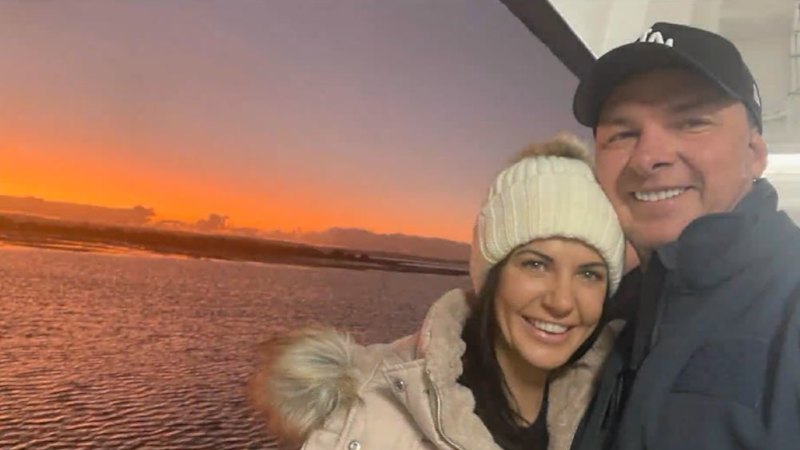
Ashley Jenkinson, the pilot who died in the Gold Coast helicopter crash.Credit: Facebook
Richardson-Johnson recalled the pair had a New Year’s Eve party at their house where Jenkinson was using cocaine.
She said Jenkinson had used cocaine in the past, in a recreational capacity at concerts or birthday parties. She said that would be about six to eight times per year.
She said she was unaware of how much cocaine Jenkinson used during the New Year’s Eve party.
Stephen Gill, a close friend of Jenkinson, told the inquest he saw the pilot with cocaine on a toolbox in a shed at the same party.
He said he believed Jenkinson last used the cocaine about midnight. Some others reported it could have been about 3am, the court heard.
Gill, who left the party about 5am, said Jenkinson had told him he left the party at some stage to help a friend into an Uber, and then took them home, carrying them to bed.
The court heard there was a conversation between Richardson-Johnson and Gill’s wife about Jenkinson’s stress levels.
Ross Meadows, who managed marketing for the company and was a close friend of Jenkinson, also told the inquest he saw the pilot with a white substance in a shed at the party.
He told the inquest Jenkinson was not a regular user of cocaine, but had seen him use it sporadically in social settings.
When he left the shed, Meadows said, “nothing good comes from that shit”, the court heard.
He said he had learned of Jenkinson’s cocaine use in the years earlier, but it did “not click” at the time to him that it could be a danger for Jenkinson’s flying or to report it to anyone at the company.
Meadows said Jenkinson was his own person, and he was not responsible for him.
Meadows said he spoke with Jenkinson regularly, and the chief pilot had not disclosed issues with his workload or indicated he had struggled with managing his duties.
Loading
He described Jenkinson as a phenomenal pilot, and while the pair had a lot of fun outside the aircraft, when Jenkinson got in, he was very serious, and did not take it lightly.
The Australian Transport Safety Bureau, which investigated the crash, said Jenkinson’s cocaine use was unlikely to have affected his flying skills.
Sea World Helicopters last week agreed to settle a civil claim with Richardson-Johnson.
The Supreme Court heard the claim centred on allegations of negligence relating to poor work practices and a lack of reasonable safety precautions.
The court heard 30 per cent of the undisclosed settlement would go to the couple’s son, Kayden, while Richardson-Johnson would get the remainder.
Nicholas Tadros, who lost his mother and his leg in the helicopter crash bravely attended the inquest this week.
Sea World Helicopters chief executive Brett Newman and director Orr-Campbell were due to give evidence to the inquest on Monday.
The company’s barrister sought a delay until February, having received 5000 pages of new material since the inquest began.
However, the coroner rejected the application, and the executives were scheduled to give evidence next week.
Start the day with a summary of the day’s most important and interesting stories, analysis and insights. Sign up for our Morning Edition newsletter.