In the vast, interconnected landscape of the modern internet, content rarely stays buried forever. Digital relics from the dark corners of the web frequently resurface, propelled by changing platform algorithms and a new generation of curious users. Recently, a notoriously disturbing piece of media known as the “1444 video” has experienced a massive resurgence, blanketing the feeds of millions on TikTok.
Once again, users are finding themselves confronted by shocking imagery and a wave of viral panic. Alongside the clips, a persistent internet rumor has returned: the claim that a supernatural curse awaits anyone who views the original recording in its entirety. As search queries spike and users actively seek out the full video, it is crucial to separate the sensationalized internet mythology from a tragic, real-world event.
Content Warning: The following article discusses suicide, self-harm, and graphic internet media. Reader discretion is strongly advised. If you or someone you know is struggling or in crisis, help is available. You can call or text 988 or chat at 988lifeline.org in the US and Canada, or contact your local emergency services.
The Original “1444” Video
To understand why this video is causing a renewed wave of distress online, one must look past the TikTok trends and examine the reality of what the footage actually depicts. The “1444” video is not a clip from a horror movie, nor is it a staged psychological experiment. It is the unedited recording of a genuine human tragedy.
The full 1444 video left everyone unable to believe their eyes
The young man at the center of the video is Gleb Korablev, a Russian youth born in 2001. Living in Moscow, Korablev was a student who, to the casual observer, seemed like any other teenager navigating the digital age. However, on a fateful day in 2019, he chose to broadcast his final moments to the world.
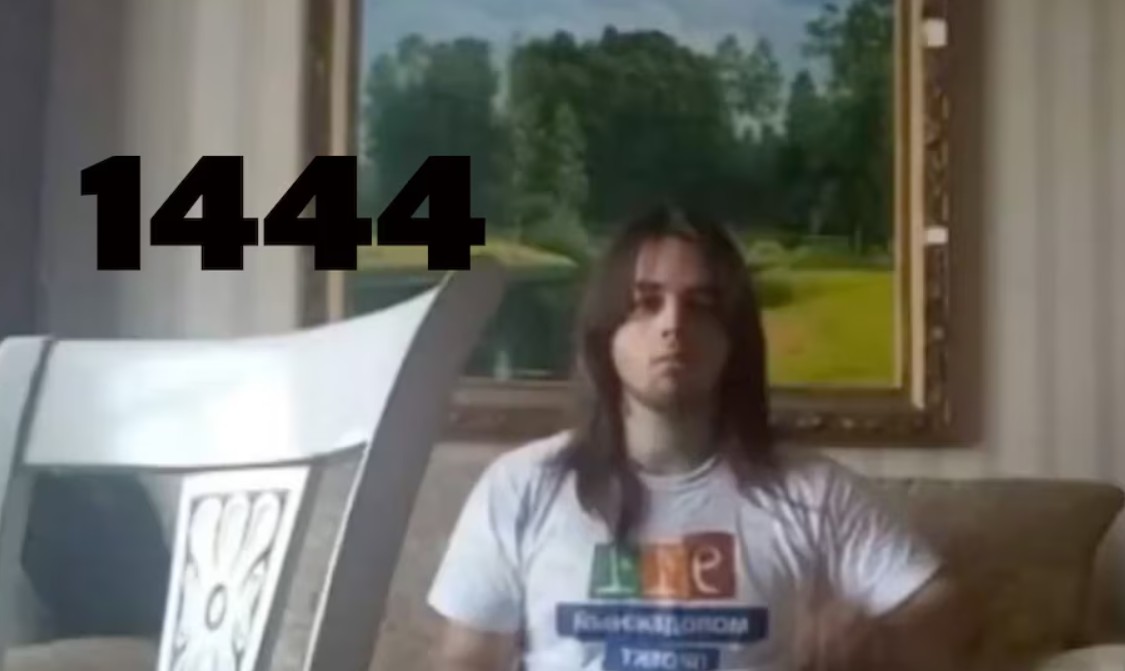
The visual details of the video are mundane, which somehow amplifies its eerie nature. Korablev is seen sitting on a beige sofa in what appears to be a typical apartment living room. Behind the couch, the wall is covered in a matching beige wallpaper, adorned with a framed painting depicting a quiet forest scene.
Korablev is dressed casually, wearing a white T-shirt featuring the number “911” printed on the front, alongside text referencing a youth summer camp. He sits directly in front of the camera, appearing calm but somber. However, the ordinary nature of the environment is shattered by the presence of a high-caliber firearm resting across his lap.
According to digital forensic reports and internet lore, the original, unedited footage of the event spanned roughly two hours. For the vast majority of that time, very little happens. However, the portion that escaped onto the wider internet and went viral is a mere five-second window—a segment that has been described as deeply traumatizing.
In these brief, fatal seconds, Korablev looks into the camera and utters his final word in Russian: “Proshchay” (Goodbye). Immediately after, he lifts the high-caliber weapon to his head and pulls the trigger. The physical impact of the shot is instantaneous and brutal. Due to the graphic nature of the high-caliber wound, the imagery is incredibly explicit, showing severe physical trauma that is far more graphic than standard cinematic violence. It is this short, hyper-violent clip that continues to bypass social media filters today.
The Origin of the Name “1444”
One of the most common questions surrounding this viral phenomenon is the meaning behind the title. Why “1444”? The number has no occult significance, nor is it a hidden mathematical riddle. Its origin is entirely rooted in the mechanics of internet censorship and algorithmic evasion.

When the video was first leaked online in October 2019, it was uploaded to YouTube. YouTube utilizes highly sophisticated automated algorithms designed to detect graphic violence, self-harm, and blood. If an uploader titles a video with terms like “Russian suicide” or “Gleb Korablev full video,” the system flags the content and removes it within seconds.
To bypass these strict moderation rules, the original uploader used a clever tactic: they gave the video the completely random, non-descriptive numerical title of “1444” and left the description box entirely blank. Because the automated text filters found nothing suspicious, the video remained active on YouTube for several hours, racking up millions of views before human moderators finally intervened and purged it from the platform. By then, the damage was done; the video had been downloaded and archived across the web, permanently branded with its arbitrary numerical name.
The “Creepypasta” Effect and Regional Impact
While the tragedy originated in Russia, the way the video evolved into an internet myth is a fascinating—and troubling—case study in digital folklore. Interestingly, the video did not achieve the same type of notoriety globally as it did in specific cultural pockets. It was within Latin American internet communities that “1444” underwent a massive transformation, shifting from a tragic news item into a fully realized “creepypasta.”

In countries across Central and South America, online forums, YouTube commentary channels, and Facebook groups began attaching a supernatural narrative to the footage. A rumor spread rapidly stating that the video carried a curse. According to the myth, if you watched the five-second clip in its entirety, you would suffer a horrific fate unless you replied to the video with the exact date and time you viewed it. This digital chain-letter mechanic caused engagement to skyrocket, ensuring that the video kept trending.
The Supposed Motive
Beyond the supernatural rumors, the internet also attempted to find a narrative reason for Korablev’s actions. Information circulating in deep-web forums suggested that Gleb Korablev chose to take his own life due to a severe, terminal heart condition. The rumor claims that after learning he had very little time left to live and facing a future of immense physical suffering, he decided to end his life on his own terms. While this motive has been widely repeated across TikTok and YouTube essays, it remains unverified by official authorities, highlighting how the internet frequently blends speculation with fact to create a cohesive story around a tragedy.
The Danger of Algorithmic Resurgence on TikTok
The current revival of the “1444” video on TikTok highlights a major vulnerability in modern social media platforms. TikTok’s algorithm is entirely driven by watch time and search intent. When users see cryptic videos talking about a “cursed video called 1444,” it triggers intense curiosity. Users immediately head to the search bar, typing in phrases like “1444 video completo” or “1444 original video.”
Malicious or engagement-hungry accounts exploit this surge by uploading edited versions of the clip. Often, they will show the first few seconds of Korablev on the sofa, only to cut away to a “jump scare” or a meme right before the fatal moment. However, unedited versions still slip through the cracks, hidden behind innocent cover images or disguised within split-screen videos alongside video game footage. This exposes unsuspecting minors and everyday users to severe, psychologically distressing imagery.
Conclusion & Digital Safety Reminder
The “1444” phenomenon is a stark reminder of the internet’s capacity to detach empathy from reality. Behind the mysterious numbers, the creepypasta rumors, and the viral TikTok trends lies the undeniable fact that a young man lost his life, and his worst moment was transformed into entertainment for the masses. There is no curse, there is no magic—only a real-world tragedy that continues to be exploited for clicks.
As digital citizens, the best way to combat the spread of such harmful content is to starve it of the attention it requires to survive. If you encounter references to the “1444” video on your feed, do not search for it, do not share it, and do not interact with the comments. Instead, utilize the reporting tools on platforms like TikTok to help moderators locate and remove the content swiftly.
Seeking Help
If you or someone you love is experiencing thoughts of self-harm, depression, or distress, please know that you do not have to carry that burden alone. Reach out to compassionate professionals who can support you:
United States & Canada: Call or text 988 to reach the Suicide & Crisis Lifeline, available 24 hours a day, 7 days a week. Services are free and confidential.
United Kingdom: Call 111 to reach the NHS mental health services, or call the Samaritans at 116 123.
International: If you are outside these regions, please visit findahelpline.com to find free, confidential support from a local crisis center in your country.