On a busy Sunday night in New York City, a devastating حادث unfolded at LaGuardia Airport one that has left the aviation world shaken and searching for answers. A landing aircraft operated by Air Canada collided with a fire truck on the runway, resulting in the deaths of both pilots and injuries to dozens of others. The incident, rare in modern aviation, has raised urgent questions about safety procedures, communication failures, and the physical limitations of aircraft design.
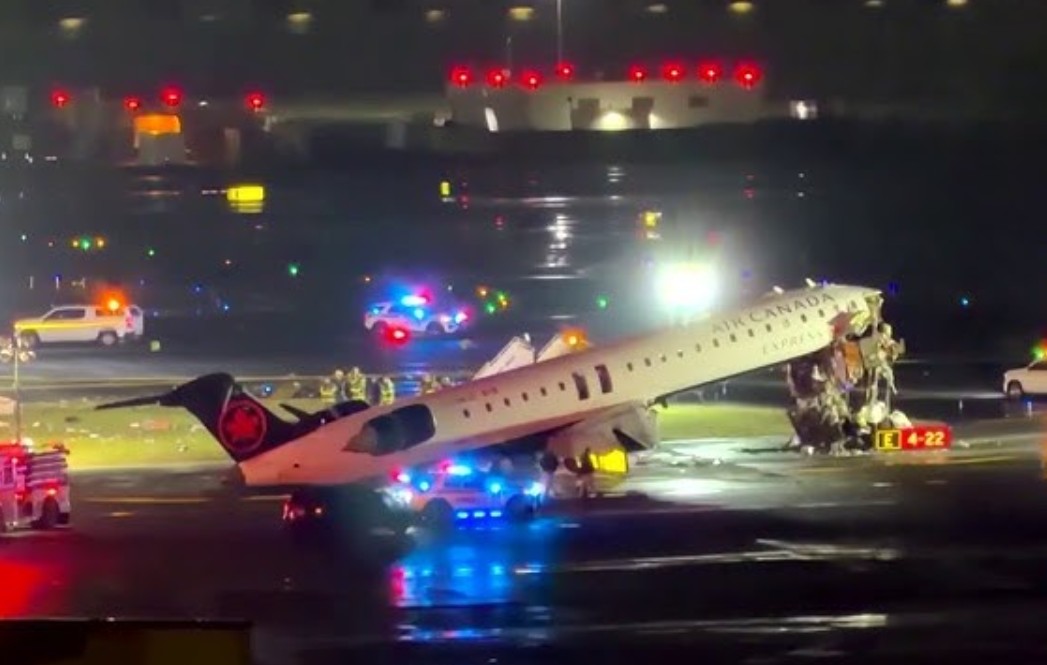
A Routine Flight Turns Catastrophic and Video
The Air Canada flight had departed from Montreal and was nearing the end of what should have been a routine journey. Onboard were approximately 72 passengers and four crew members. As the aircraft descended into LaGuardia, everything appeared normal until the moment it touched down.
LaGuardia Plane Crash Full Video
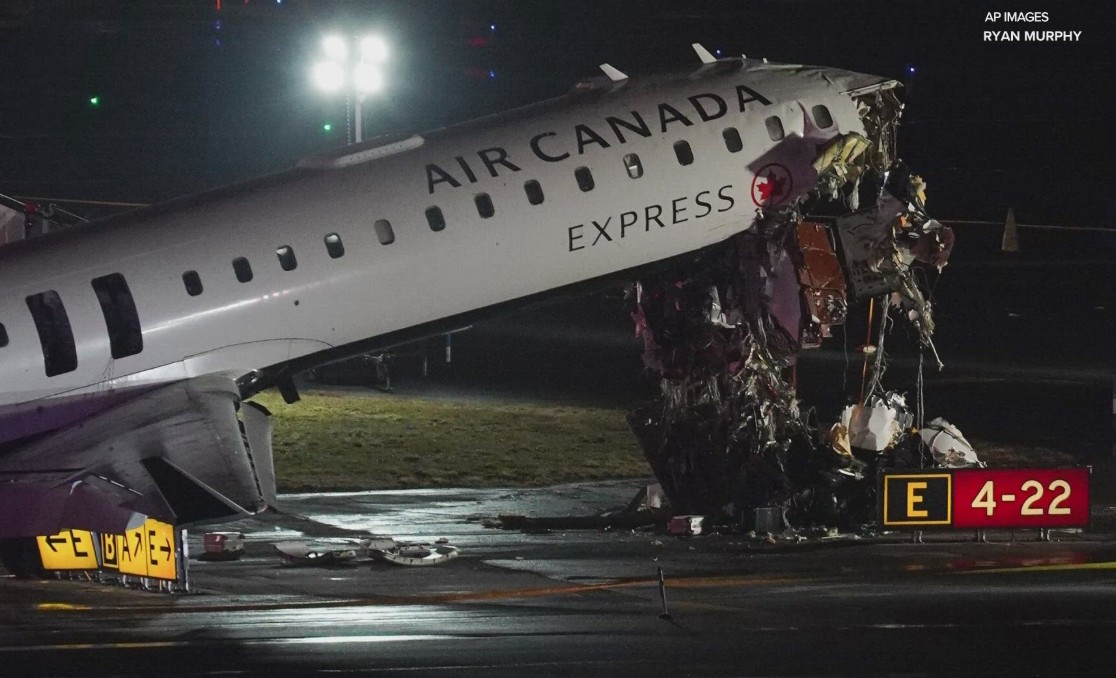
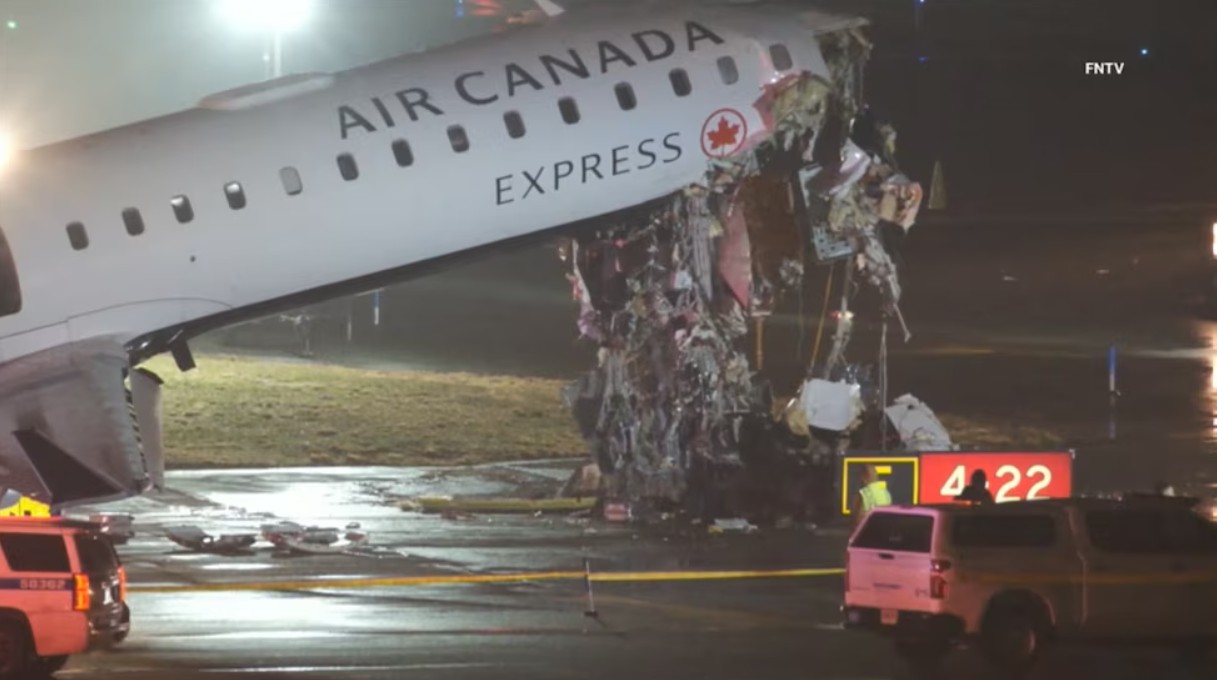
Traveling at an estimated speed of over 90 miles per hour, the plane made contact with the runway. Almost immediately, disaster struck. A fire truck, reportedly responding to a separate emergency, had entered the same runway. Within seconds, the aircraft slammed into the vehicle in a violent collision that sheared off the plane’s nose cone and sent shockwaves through the aviation community.
The impact was catastrophic. Both pilots were killed instantly, marking a tragic loss of life and expertise. Meanwhile, chaos erupted inside the cabin as passengers braced for impact, many suffering injuries in the process.
Emergency Response and Immediate Aftermath
First responders rushed to the scene within moments. According to the Port Authority of New York and New Jersey, 41 passengers and two firefighters were transported to nearby hospitals. By Monday afternoon, 32 individuals had been released, though the severity of remaining injuries remained unclear.
The airport was immediately shut down to allow investigators to assess the scene. Flights were delayed or diverted, affecting thousands of travelers. Operations resumed later that day, but the psychological impact of the حادث lingered.
Witnesses described a scene of confusion and urgency. Emergency crews worked tirelessly to evacuate passengers and secure the area, while investigators began piecing together the sequence of events that led to the collision.
Unanswered Questions and Investigation Focus
At the heart of the investigation lies a critical question: how did a fire truck and a landing aircraft end up on the same runway at the same time?
Early reports suggest that air traffic control may have played a role. The fire truck was apparently given clearance to enter the runway, only to be told moments later to stop. This sequence raises concerns about communication breakdowns and procedural lapses.
Investigators are now examining:
Air traffic control recordings
Radar data
Communication logs between pilots and ground crews
The possibility of human error, system malfunction, or miscommunication is being carefully analyzed. In an environment as tightly regulated as aviation, even a minor lapse can lead to catastrophic consequences.
Why the Collision Was So Devastating
One of the most striking aspects of this tragedy is the extent of the damage caused by what might seem like a relatively simple collision. Experts say the answer lies in how airplanes are designed.
According to Michael McCormick, aircraft are engineered primarily for airworthiness not for ground collisions. Unlike cars, which are built with crumple zones, airbags, and reinforced frames, airplanes prioritize efficiency, weight reduction, and aerodynamic performance.
“They’re designed to fly, not to crash into vehicles,” McCormick explains. “Automobiles undergo repeated crash testing. Aircraft do not.”
Similarly, John Hansman emphasizes that adding structural strength to withstand such impacts would significantly increase weight, reducing fuel efficiency and overall performance.
Structural Weaknesses Exposed
The collision highlighted several vulnerabilities in aircraft construction. While much of an airplane is built from durable aluminum, certain components are intentionally lightweight.
The nose cone, for example, is made of plastic rather than metal. This design allows radar systems to function properly, but it also makes the front of the aircraft particularly fragile. In this incident, that weakness proved critical, as the nose was completely destroyed upon impact.
Other design elements also reflect trade-offs:
Engines are designed to detach in water landings
Cockpits are reinforced against bird strikes
Structures are optimized for flight, not collisions
These features enhance safety in common aviation scenarios but offer little protection in rare ground collisions like this one.
Why the Pilots Couldn’t Avoid the Crash
A natural question arises: why didn’t the pilots take evasive action?
The answer lies in the physics and limitations of aircraft movement. Unlike cars, planes cannot swerve quickly. Steering on the ground is minimal and primarily controlled through the landing gear.
At the moment of touchdown, the aircraft was traveling at high speed with limited options:
Stopping distance was already committed
There was insufficient runway length for a takeoff maneuver
The fire truck likely appeared too suddenly to react
Even though pilots are trained for “touch-and-go” landings, such maneuvers require preparation and sufficient runway space conditions that were not present in this scenario.
Hansman notes that once a plane reaches a certain speed on landing, “you can only stop as fast as you can stop.” If an obstacle appears unexpectedly, there may be no viable escape.
The Role of LaGuardia’s Infrastructure
The physical characteristics of LaGuardia Airport may also have played a role. Known for its relatively short runways, the airport presents unique challenges for pilots and ground operations.
Originally not designed for modern commercial jets, LaGuardia’s runways were extended in the 1960s. However, they remain shorter than those at many other major airports.
While it is not yet clear whether runway length contributed directly to the حادث, experts suggest that limited space reduces the margin for error especially during high-speed landings.
Broader Implications for Aviation Safety
Runway collisions are extremely rare, but when they occur, the consequences can be severe. This incident has reignited discussions about runway safety and coordination between air and ground operations.
Key areas of concern include:
Communication clarity between air traffic control and ground vehicles
Real-time monitoring systems to detect runway incursions
Enhanced training for emergency response coordination
Technological solutions, such as automated warning systems, may help prevent similar incidents in the future. However, implementation requires significant investment and global coordination.
Public Reaction and Industry Response
News of the collision spread quickly, prompting widespread concern among travelers and aviation professionals alike. Social media was flooded with reactions, ranging from shock to demands for accountability.
Airlines and regulatory bodies are closely monitoring the investigation. Transparency will be critical in maintaining public trust, particularly as air travel continues to rebound globally.
For many, the حادث serves as a stark reminder that even the safest modes of transportation are not immune to unforeseen risks.
The collision at LaGuardia Airport stands as one of the most unusual and tragic aviation incidents in recent memory. With two lives lost, dozens injured, and countless questions still unanswered, the حادث underscores the complexity of modern air travel.
While aviation systems are designed with multiple layers of safety, this event reveals how quickly those systems can fail when coordination breaks down. As investigators continue their work, the findings will likely shape future policies, training, and technologies aimed at preventing such tragedies.
In the end, this was not just an accident it was a convergence of timing, design limitations, and possible human error. And as the aviation world reflects on what went wrong, one thing is certain: lessons must be learned to ensure that such a disaster never happens again.
News –